If you’re deciding whether to visit Val d’Orcia in June, the real question isn’t whether it’s beautiful. It always is.
The real question is this:
Do you want golden harvest fields — or soft green hills?
If golden wheat under strong summer light is your image of Tuscany, June makes sense.
If you prefer cooler air and fresh green landscapes, spring may suit you better.
This guide focuses on that decision.
June Turns Val d’Orcia Golden — Not Green
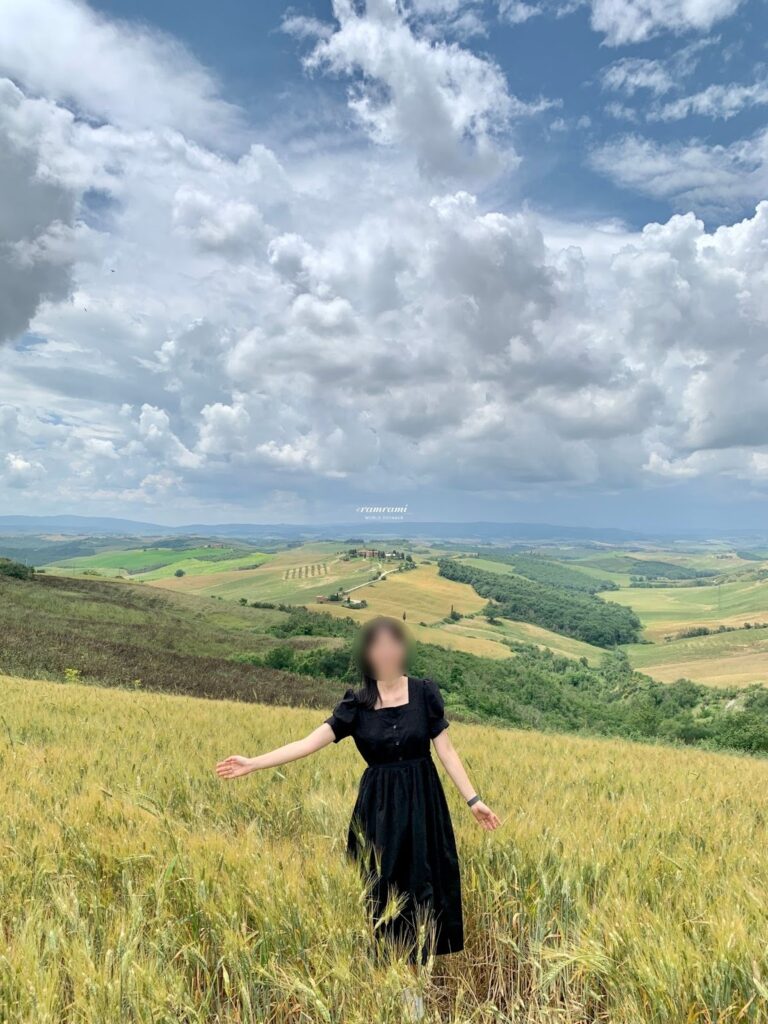
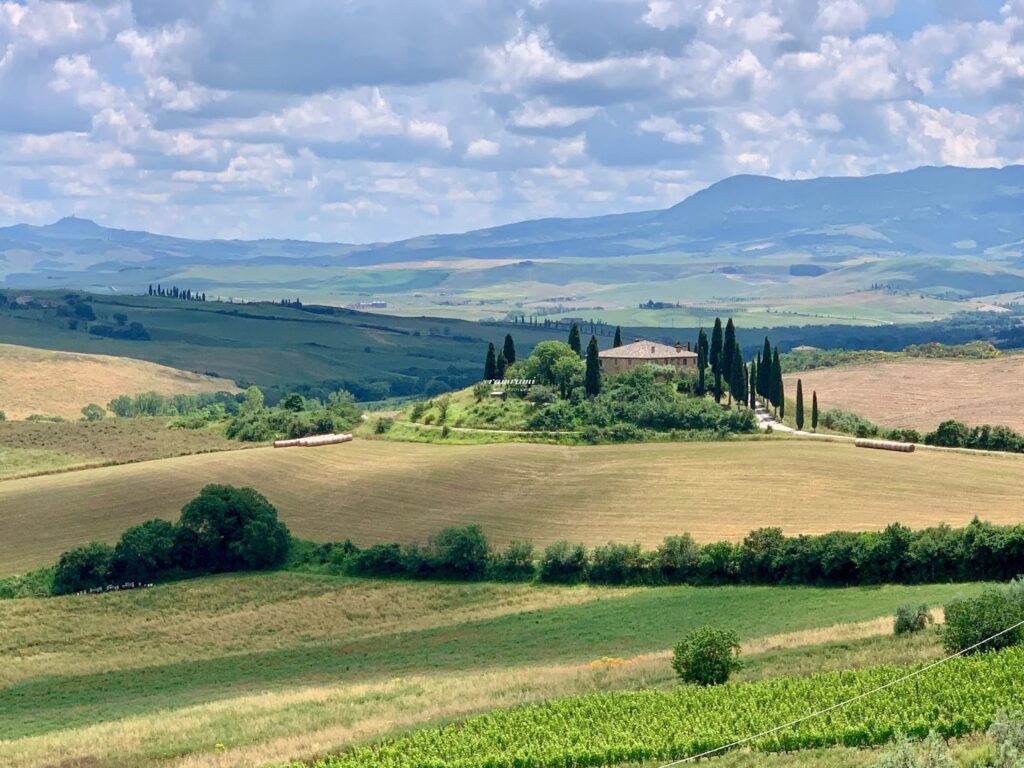
By mid-June, Val d’Orcia shifts from spring green to deep gold.
The rolling hills around Pienza and Asciano become heavier in tone. Wheat fields mature, texture sharpens, and the light grows stronger. This is the cinematic Tuscany many people imagine.
But there is a trade-off.
Afternoon temperatures often reach 28–34°C (82–93°F). Shade is limited. Long midday walks can feel intense.
It’s not ideal for travelers who dislike strong sun or plan to explore mostly on foot.
June vs Spring: What Actually Changes
| Factor | June | April–May |
| Landscape | Golden wheat | Bright green hills |
| Temperature | 28–34°C | 18–24°C |
| Comfort Level | Lower at midday | Comfortable |
| Light Quality | Dramatic, high contrast | Soft, even |
| Overall Mood | Cinematic | Fresh & pastoral |
If color intensity matters more than comfort, choose June.
If comfort matters more than drama, choose spring.
The Drive Matters More Than the Famous Stops
Yes, Agriturismo Baccoleno and the well-known S-curve roads are iconic.
But in Val d’Orcia, some of the most memorable views appear between those spots.
Spending the entire day chasing exact GPS pins can make the experience feel rushed. Choosing one base — near Pienza or Asciano — and exploring secondary roads slowly often works better.
A structured route suits travelers short on time.
A flexible loop suits photographers and slow travelers.
There Is No Guaranteed “Golden Week”
Harvest timing changes every year. Fields are privately owned, and each owner cuts at different times.
Late June statistically improves your chances of seeing mature golden wheat, but no single date guarantees it.
Plan for the region, not a single hillside.
Practical Notes for Driving
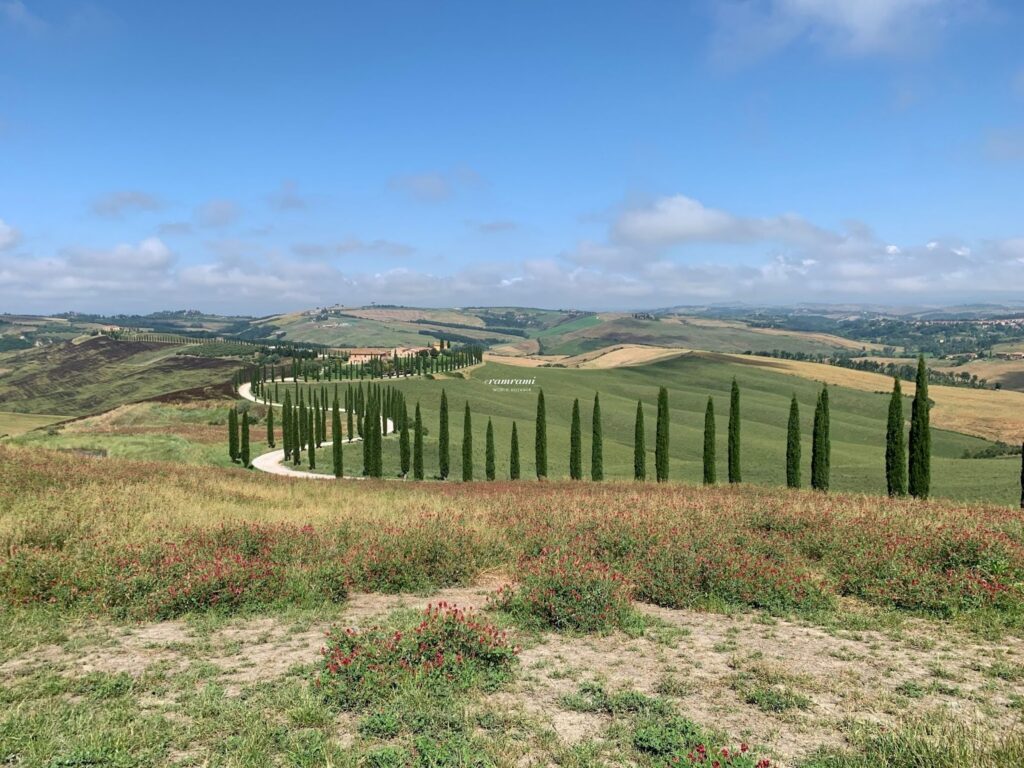
Driving in Val d’Orcia requires patience and timing.
Val d’Orcia roads are narrow and winding.
When stopping for photos:
- Pull completely off the road
- Avoid blind curves
- Leave space for farm vehicles
Driving before 9am or after 6pm makes a noticeable difference. The light improves, and traffic decreases.
Respect Private Land
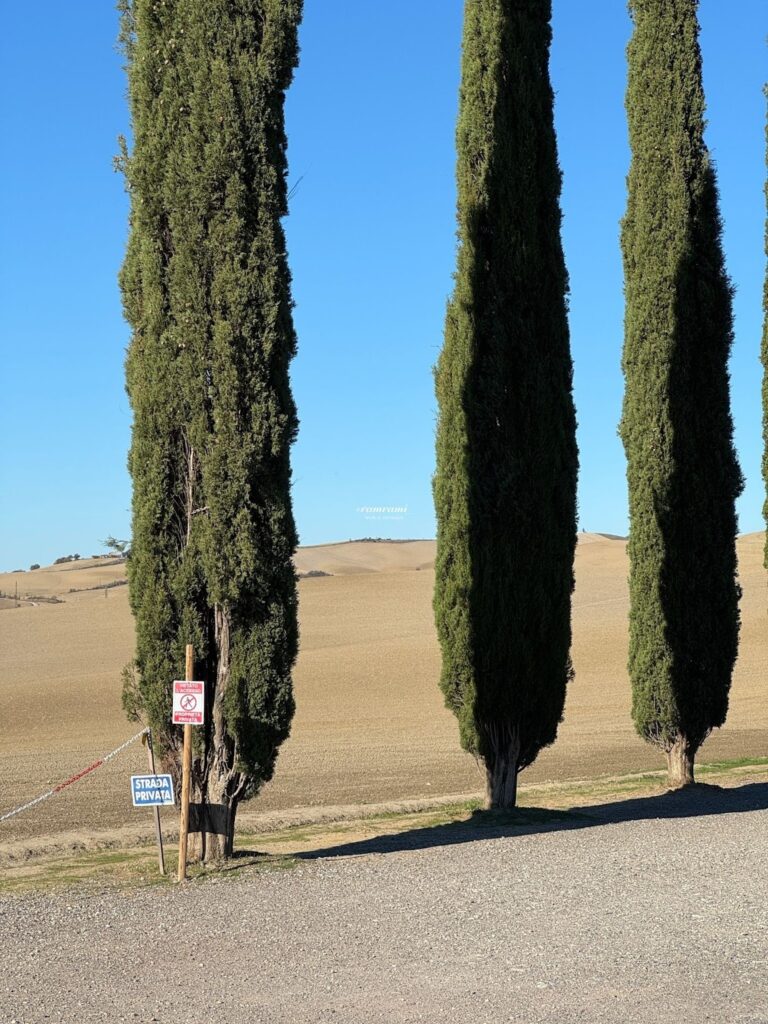
Many cypress-lined driveways and wheat fields are private property.
Taking photos near entrances is generally fine. Walking into fields is not.
The landscape feels open, but it isn’t public land.
The June Bonus: Poppies
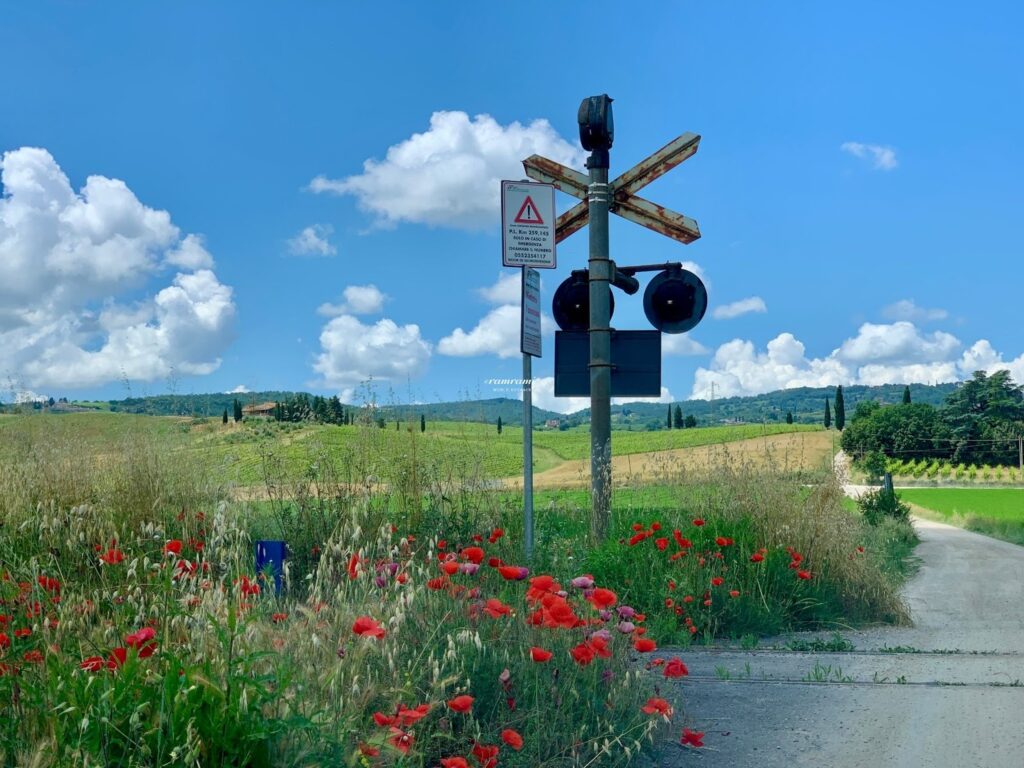
In Val d’Orcia in June, red poppies often appear along field edges and railway lines.
The contrast of red, gold, and deep blue sky is specific to early summer. Once harvest begins, that combination fades.
If you want layered color, June offers it.
Who Should Choose June?
Choose June if:
- You want golden wheat more than mild weather
- You enjoy rural driving
- You don’t mind strong sunlight
Choose Spring if:
- You prefer cooler daytime temperatures
- You plan to walk villages extensively
- You value comfort over visual intensity
Final Decision
Val d’Orcia rewards patience.
If you’re willing to drive slowly, stop without a strict plan, and accept heat in exchange for golden scenery, June makes sense.
If you prefer easier weather and greener hills, spring is the smarter choice.
Golden Tuscany is hotter.
Green Tuscany is softer.
Choose June for gold.
Choose spring for comfort.