Canang Sari is a daily Balinese Hindu offering placed on the ground as part of a routine ritual of gratitude and balance.
Accidentally stepping on one is not illegal — but intentionally disturbing a fresh, burning offering is disrespectful.
Understanding Canang Sari changes how you move through Bali.
This guide explains etiquette, timing, and the practical reality travelers face.
Why This Guide Exists
There’s a lot written about Bali — its beauty, its rituals, its rules.
But practical clarity is often missing.
How do you walk respectfully, understand the basics, and still enjoy your time without anxiety?
What Is Canang Sari?
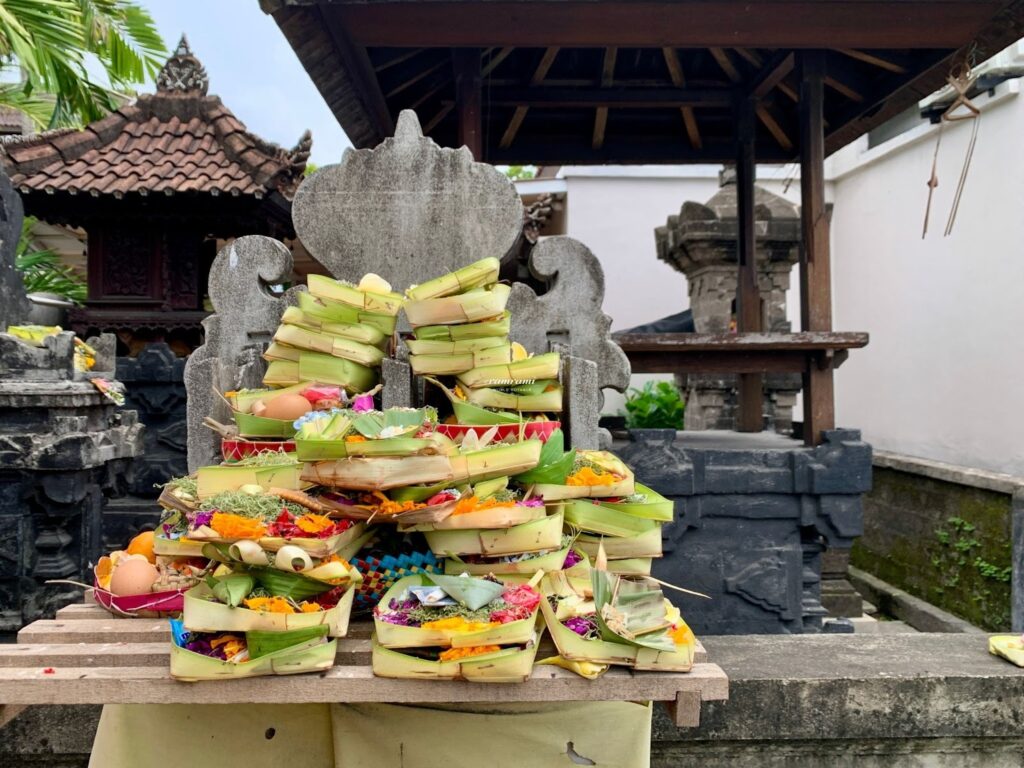
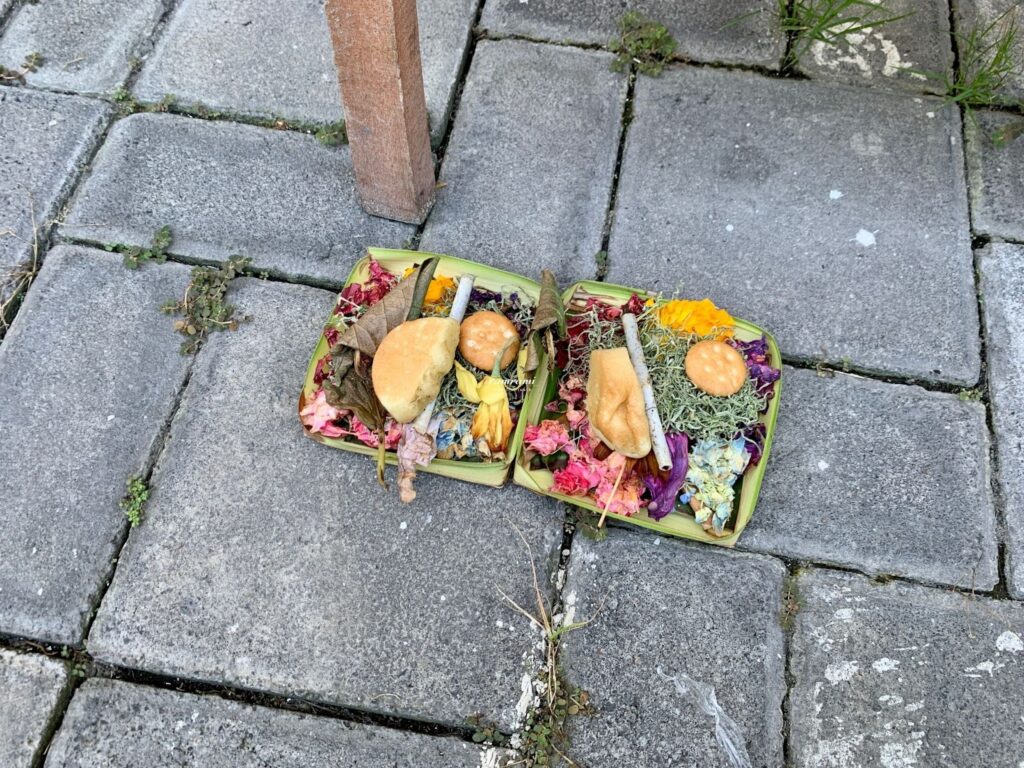
Canang Sari is a small palm-leaf tray filled with flowers, rice, and incense.
It represents daily gratitude and balance in Balinese Hinduism.
You will see Canang Sari:
- On sidewalks
- In front of shops
- On temple shrines
- On hotel stairs
- On motorbike seats
- On dashboards
Typical placement times:
- Around 09:00
- Around 12:00
- Around 18:00
If you stay more than 48 hours in Bali, you will encounter dozens daily.
Active vs. Finished: The Incense Rule
The simplest filter:
| Condition | Meaning | What To Do |
| Incense burning | Ritual active | Step around carefully |
| Fresh flowers, recently placed | Active offering | Show awareness |
| No smoke, flowers wilted | Ritual completed | Avoid if easy, don’t panic |
| Already scattered | Completed cycle | Continue normally |
This removes most confusion.
The one rule most tourists miss is simple: avoid disturbing a fresh offering while the incense is still burning.
What Happens If You Step on Canang Sari?
Short answer: nothing dramatic.
There is:
- No legal issue
- No curse
- No confrontation
Locals understand accidents.
However:
Never intentionally step on a fresh Canang Sari, especially if incense is burning or someone is praying nearby.
Not ideal for travelers glued to their phone while walking.
The Logistics Reality
Many assume every Balinese family hand-weaves offerings daily.
The practical reality:
- Many still prepare them at home.
- Morning markets sell ready-made sets.
- Businesses subscribe to daily delivery.
- Market price range: approx. IDR 1,000–3,000 per unit (local average, updated 2026).
There is a functioning “Canang economy.”
It is ritual — and logistics.
Comparison: Fresh vs Dried Canang Sari
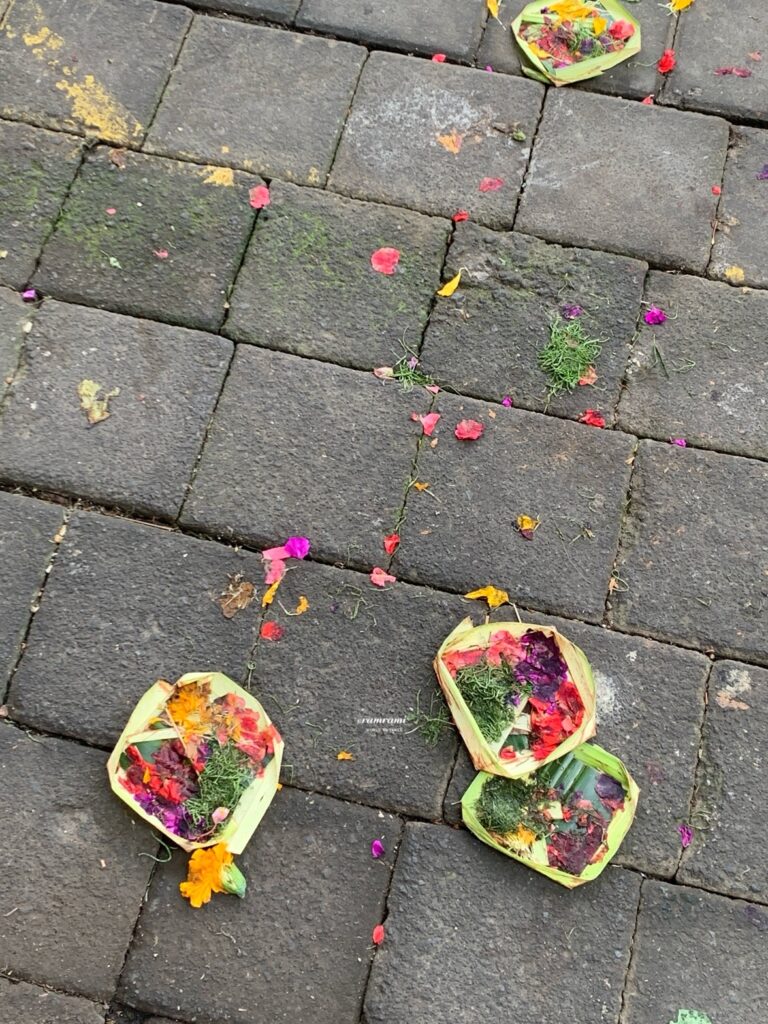
| Type | Fresh | Dried |
| Incense | Burning | Not burning |
| Flowers | Bright | Wilted |
| Sensitivity Level | High | Lower |
| Action | Avoid carefully | Avoid if possible |
This is not superstition.
It is timing.
Who Should Pay Extra Attention?
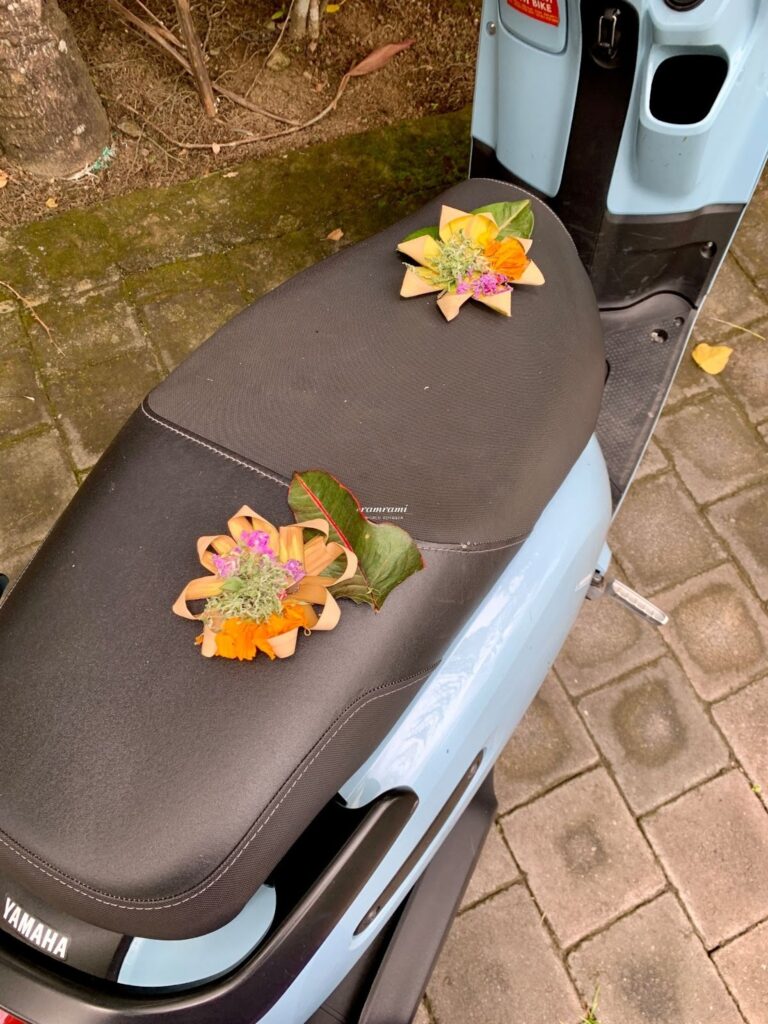
Canang Sari appears in more places than most travelers expect.
In many places, Canang Sari is also placed on motorbikes — a daily blessing for safety.
If you are:
• Staying in Ubud or local neighborhoods → Observe placement cycles.
• Visiting temples → Be extra cautious.
• Walking crowded sidewalks → Stay aware, not anxious.
• Staying only in resorts → You’ll see them, but not fully experience rhythm.
Best mindset: Respect, not fear.
Sustainability Note
Traditional Canang Sari is biodegradable:
- Palm leaf base
- Fresh flowers
- Organic materials
They decompose naturally or are cleared respectfully.
Though some urban areas may look messy later in the day, the system itself is low-impact by design.
Final Judgement
Bali is often called the “Island of Gods.”
More accurately, it is the Island of Offerings.
Canang Sari is not decoration.
It is daily spiritual maintenance.
Watch your step.
But more importantly, watch the rhythm.
Understanding that rhythm changes the experience.